

















 0
0
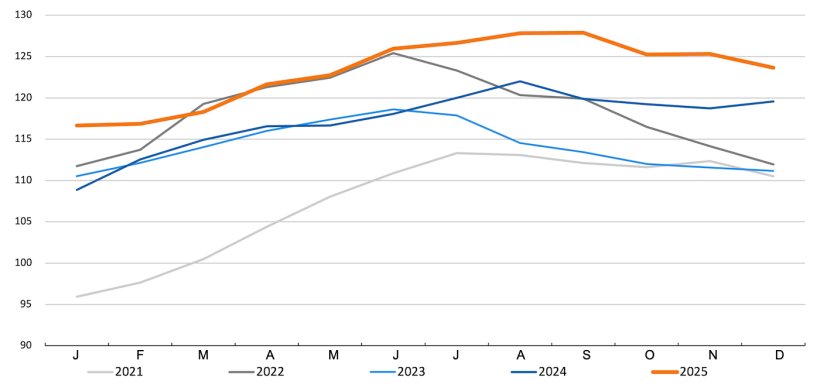
The FAO Meat Price Index averaged 123.6 points in December, down 1.7 points (1.3%) from its revised November value, but still 4.1 points (3.4%) above its level a year ago. Prices declined across all meat categories, with those of bovine and poultry meats falling the most.
Lower world bovine meat prices reflected weaker quotations in Australia, where seasonally dry conditions prompted herd destocking, increasing cattle availability for slaughter and exerting downward pressure on prices. International poultry meat quotations declined, as ample exportable supplies outweighed global import demand.

Ovine meat prices eased marginally amid larger seasonal supplies entering the market, despite continued solid global import demand.
Pig meat prices decreased slightly, led by weaker quotations in the European Union amid subdued global demand.
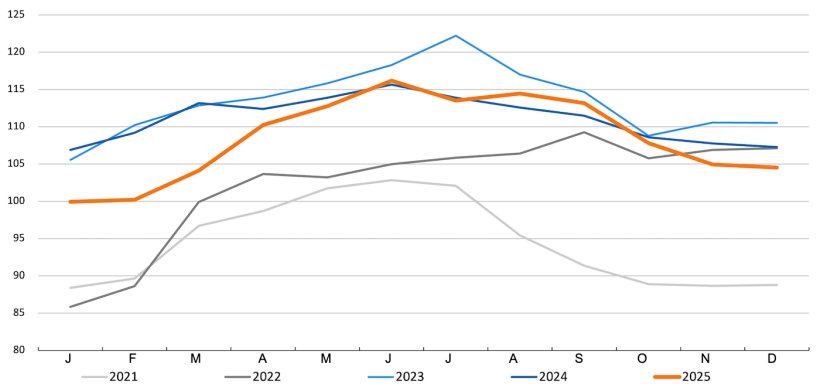
For 2025 as a whole, the FAO Meat Price Index averaged 123.2 points, up 6.0 points (5.1%) from 2024, supported by firm global import demand and heightened market uncertainty linked to animal disease outbreaks and geopolitical tensions. World bovine and ovine meat prices were up sharply year on year, on robust import demand and limited export availabilities. By contrast, pig meat prices declined, driven by weaker global import demand, while poultry meat prices edged lower due to abundant supplies.
January 9, 2026/ FAO.
https://www.fao.org